
How to Read a Tequila Label: What 100% Agave, NOM and Mixto Actually Mean
A tequila label is a legal document wearing nice clothes. Nearly every phrase on it is either required by Mexican regulation, restricted by United States labelling rules, or chosen with great care by the brand. Once you can tell those three apart, ten seconds in front of a shelf will teach you more than an hour of asking around.
What does 100% agave mean on a tequila label?
The phrase "100% agave" on a tequila label means every fermentable sugar in the bottle came from blue Weber agave, with no other sugars added before fermentation. The claim is regulated and certified, so a producer cannot print it without meeting the standard. Tequila that does not carry the phrase is a mixto, which is permitted to draw part of its sugars from sources other than agave.
The claim appears several ways ("100% agave," "100% de agave," "100% puro de agave," "100% blue agave") and all of them mean the same thing. It is usually set in small type near the bottom of the front label or on the back, beside the volume and the alcohol strength, rather than in the large decorative lettering. Look at the fine print, not the flourish.
One structural detail is worth knowing: tequila labelled 100% agave must be bottled in Mexico. Product shipped out in bulk to be bottled elsewhere cannot carry the claim, which is a quiet reason the phrase is a real shortcut and not just marketing language.
What is mixto tequila and how do you know if you are holding one?
Mixto is tequila in which only part of the fermentable sugar comes from agave and the balance comes from other sugars, most commonly cane. Mexican regulation requires that at least 51 percent of the fermentable sugars come from blue Weber agave, so a mixto can be made with as little as roughly half its sugars from agave. No bottle is ever labelled "mixto," so the reliable tell is the absence of the words "100% agave" anywhere on the label.
The word belongs to the industry, not to the shelf. Because no brand volunteers it, plenty of drinkers spend years assuming every bottle marked tequila is made entirely from agave. Mixto is not fraud: it is a legal, long-standing category that fills most of the world's cheap frozen margaritas.
It is, however, a different drink. Agave sugar is expensive and slow, since a plant spends years in the field before it is worth cutting, while sugars from other sources are cheap and immediate. The gap usually shows up as a thinner middle and a sharper finish.
What is the NOM number on a tequila bottle?
The NOM is a four-digit number printed on every bottle of tequila that identifies the certified distillery where the liquid was produced. Because a single distillery can produce for many different brands, unrelated labels often share the same NOM number. A NOM tells you who made a tequila; it does not by itself tell you whether the tequila is any good.
NOM stands for Norma Oficial Mexicana, the official standard that governs the category. The Consejo Regulador del Tequila, known as the CRT, certifies distilleries and verifies that what goes into a bottle meets the rules. The number is usually printed on the back label near the health warnings.
Online, the NOM has taken on a second life as a shortcut for judging bottles, and that is where people go wrong. Two brands sharing a distillery can still differ enormously in agave, cooking, fermentation, cuts and barrels. Treat the NOM as an address, not a verdict.
What does hecho en México mean on a tequila label?
"Hecho en México" means "made in Mexico" and appears on tequila because tequila is a denomination of origin product that must be produced inside a defined region of Mexico. That region is centred on the state of Jalisco and includes authorised municipalities in Guanajuato, Michoacán, Nayarit and Tamaulipas. The phrase confirms origin only, and says nothing about whether a bottle is 100% agave or mixto.
Within that region, growers talk about two broad terroirs. Los Altos, the highlands of Jalisco, sit on iron-rich red soil at altitude, and the agave grown there tends to read sweeter and more floral. The lowlands around the town of Tequila run earthier and more mineral. Neither is better, but the difference is real.
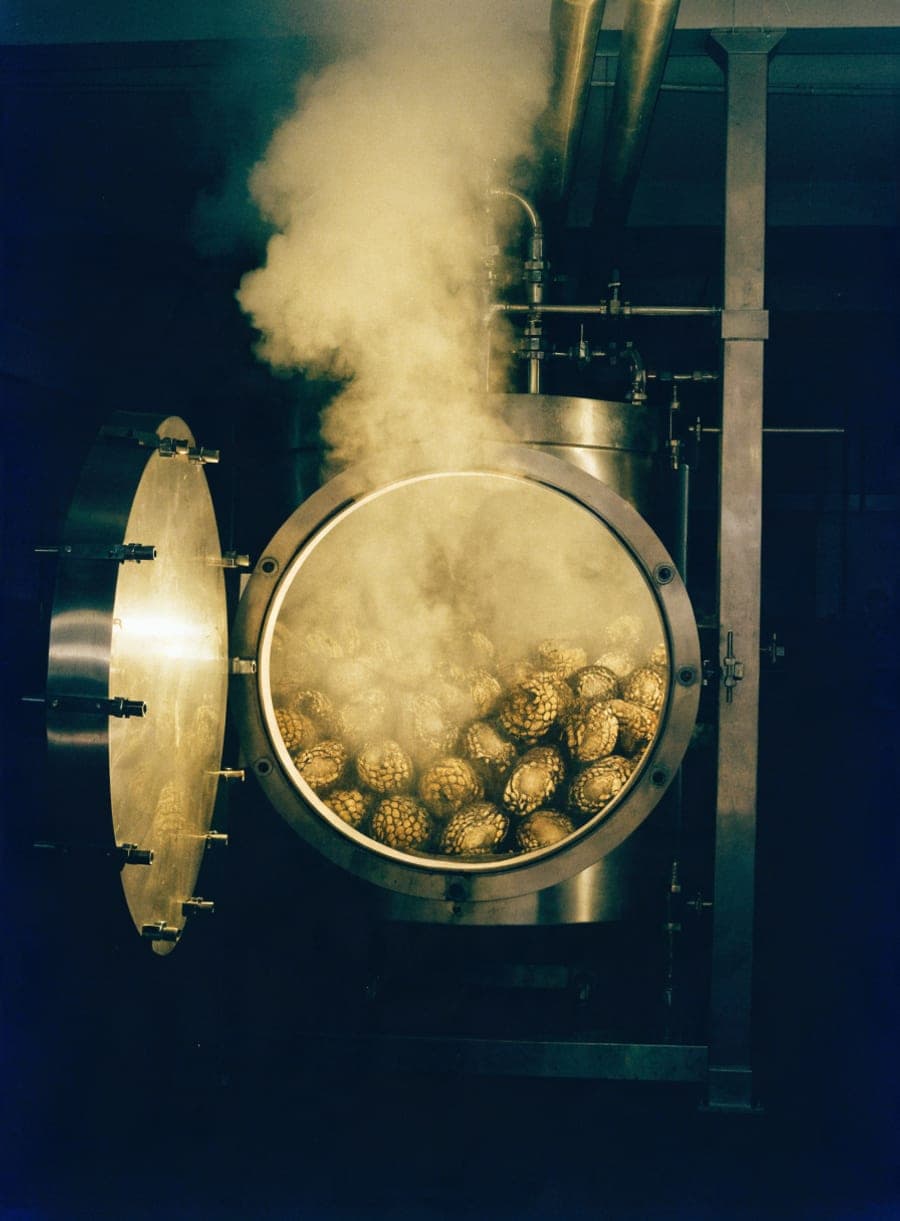
Mar Azul is a family-owned house based in San Antonio, Texas, founded by Susana Sutton, with agave grown and distilled in the highlands of Jalisco and cooked in an autoclave rather than rushed. If you want the longer version of our craft, the process page walks through it step by step.
What do blanco, reposado, añejo and extra añejo mean on a label?
Blanco tequila, also sold as silver or plata, is bottled unaged or rested less than two months. Reposado spends between two months and one year in oak, añejo between one and three years, and extra añejo more than three years. The four classes measure time in wood and nothing else, so an excellent blanco can easily outclass an ordinary añejo.
What the barrel does is trade agave for wood. Blanco is the most exposed and the most honest: bright, peppery, vegetal, with nowhere to hide. Reposado softens the edges and picks up vanilla and light spice. Añejo goes darker and rounder, toward caramel and dried fruit. Extra añejo gives up more of the agave still, which some drinkers love and others find takes the spirit too far from the plant.
You will also meet the word cristalino, which describes an aged tequila filtered until it runs clear again, keeping some barrel character while losing the colour. Cristalino began as a market invention rather than a formal class and its regulatory treatment has continued to evolve, so read it as a process, not a guarantee of age. Our Reserva line stays with the classic three: Silver, Reposado rested six months in American white oak, and Añejo at eighteen months in Kentucky white oak.
Why do some flavored tequilas say distilled spirits specialty?
"Distilled spirits specialty" is a United States labelling classification used for spirits that do not fall neatly into one of the standard defined categories. Flavored agave spirits commonly carry that classification because adding flavor takes a product outside the strict definition of tequila for labelling purposes. The phrase is a regulatory classification and not a judgment about quality or about what is inside the bottle.
This is one of the places where a label reads as a demotion when it is really a filing category. Our Sabores line carries that classification, and its eight expressions (Coconut, Coffee, Chocolate, Mint, Pomegranate, Banana, Almond and Habanero) start as 100% blue Weber agave tequila and are blended with real natural ingredients rather than infused after the fact. The Coconut took Double Gold at the European World Spirits Competition.
With any flavored bottle, read past the classification and look at the ingredient language instead. Natural or artificial? Sweetened with what? Built on a real agave base or on a neutral spirit? Those answers matter far more than the category name. Our cocktail recipes are built around exactly that idea.
What are tequila additives and why do people talk about additive free tequila?
Tequila regulation permits small quantities of mellowing agents, known in Spanish as abocantes, which are commonly described as caramel colour, natural oak extract, glycerin and sugar syrup. Abocantes are allowed up to a small percentage of the product by weight and do not have to be declared on the label, including on tequila labelled 100% agave. That absence of disclosure is the reason a growing number of drinkers now look for tequilas described as additive free.
Abocantes round a spirit off: a little more sweetness, a little more colour, a little more weight on the tongue, a softer finish. Used within the rules they are entirely legal, and plenty of well-regarded bottles have always been made that way. The debate is not about safety. It is about disclosure, and about whether a spirit sold on the romance of agave and time should be quietly adjusted at the end.
Be careful with the phrase itself. No official government seal exists for "additive free," so the term is used loosely, backed in most cases by independent lists or by a producer's own word. The honest approach is to ask the brand directly and to trust your palate: a tequila that tastes noticeably sweet and syrupy for its class is telling you something.
What should you look for on a tequila label before you buy?
Before buying a bottle of tequila, confirm four things on the label: the words "100% agave," a four-digit NOM number, a stated class such as blanco, reposado, añejo or extra añejo, and the alcohol strength, which for tequila ranges from 35 to 55 percent and is most often 40 percent. A bottle that does not say "100% agave" is a mixto, whatever else the front label promises.
- ·"100% agave" in the fine print. If the phrase is missing, the bottle is a mixto.
- ·A NOM number, which tells you which certified distillery produced the liquid.
- ·A clearly stated class: blanco, reposado, añejo or extra añejo.
- ·The alcohol strength, commonly 35 to 55 percent, with 40 percent the usual figure.
- ·"Hecho en México," confirming the spirit was produced inside the denomination of origin.
- ·Colour that matches the class. A very dark reposado is worth a second look.
None of this replaces tasting. A label tells you what a bottle is allowed to claim; only the glass tells you whether the people who made it were paying attention. Read the fine print, pour a small measure neat, and give it a minute before you judge. If you want somewhere to start, our eleven expressions run from an unaged Silver to an eighteen-month Añejo, with eight blended Sabores in between.
Common questions
- Is tequila gluten free?
- Tequila is distilled from the blue Weber agave plant rather than from grain, so it contains no gluten-bearing ingredient. Flavored agave spirits can include additional ingredients, so anyone avoiding gluten should read the ingredient statement on that specific bottle or contact the producer.
- Does tequila expire once the bottle is opened?
- Tequila does not spoil, but an opened bottle slowly loses aroma and definition as oxygen replaces the liquid in the bottle. A bottle kept sealed, upright and out of sunlight generally drinks well for a year or more after opening, with the last third fading fastest.
- Should tequila be refrigerated?
- Tequila does not need refrigeration and is usually served at or just below room temperature, which keeps its aromatics open. Chilling a blanco or a flavored expression is a matter of preference and works well in warm weather, while aged tequila generally shows more of its barrel character when it is not cold.
- What is the difference between tequila and mezcal?
- Tequila must be made from blue Weber agave within a defined region centred on Jalisco, while mezcal can be made from many different agave species across a separate set of Mexican states, most famously Oaxaca. All tequila fits the broad definition of mezcal historically, but under current denominations of origin the two are labelled and regulated as distinct categories.
- Does a higher price mean a better tequila?
- Price in tequila reflects agave cost, years of aging, packaging and marketing spend, and only some of those reach the glass. A well-made 100% agave blanco at a moderate price can taste better than a heavily aged bottle at three times the cost, so the label facts and your own palate are more reliable guides than the shelf tag.
- Is aged tequila better than blanco?
- Aging changes tequila rather than improving it: time in oak adds vanilla, caramel and softness while covering some of the agave's own bright, peppery character. Many distillers consider blanco the truest test of a producer's work, because there is no barrel to hide behind.